
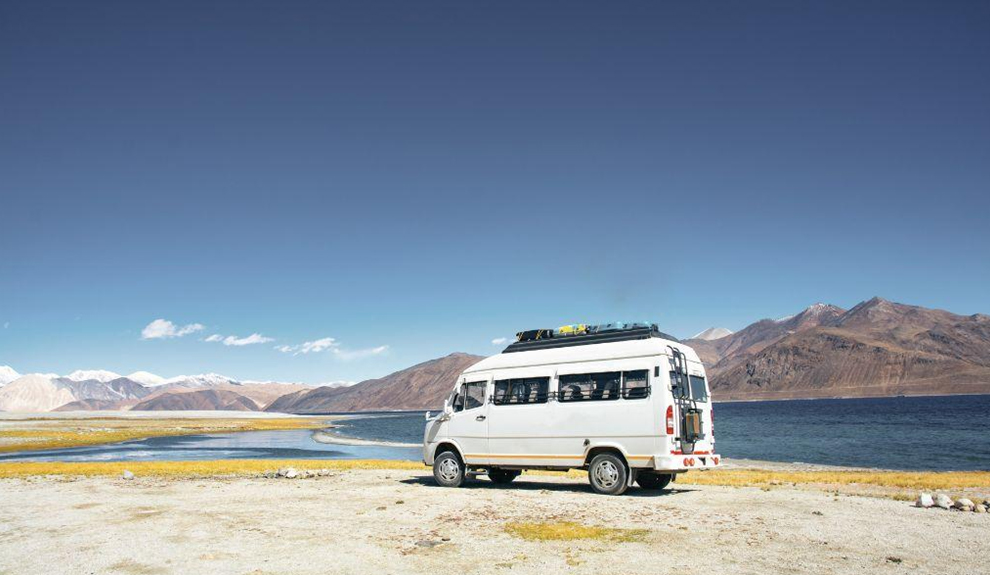
The Himalayas, the mighty white shield, have been the fortress of India for decades. What we have seen in the Geography textbooks is enormous hills, and not just a backdrop. But an expression of consequences at every step. For the majority of travellers, it’s not just the altitude they are excited about, but the journey that unfolds.
And that is why it is rightly said that choosing travel in the Himlayas is a mammoth task. Cheap travel is not just a bad deal; it is a dangerous bet. But with reliable and seamless transfers, the tangent of the entire tour changes within seconds.
Let us talk about the estimates of budget shortcuts first. The traveller who saves ₹3,000 on a car by booking through an unverified agent doesn’t realise they may be trading that saving for a vehicle with no assistance, summer tyres on a mountain road, and a driver who has never actually navigated the high Passes. The maths only looks good on the booking page. On the road, somewhere between Harsil and Gangotri, it starts to look very different.
The Road Is Not the Problem, Your Preparation Is
India has a certain romance with improvisation. We celebrate jugaad. We prize the art of making do. And in most of India, that instinct serves us beautifully, a delayed train, a missed connection, a chai stall substituting for a five-star lounge. The Himalayas, however, are not for most of India.
Above 3,000 metres, roads narrow to a single lane that a Google Maps algorithm has never actually driven. Landslide corridors open without warning in July and August. River crossings that are routine in October become impassable in June. Think of this journey as a chessboard and the Himalayas as the grandmaster. They do not care about your budget or experience. All they respond to is your preparation. The right car for the Himalayas is not the cheapest car available; it is a vehicle built for what lies ahead.
A well-maintained SUV, Toyota Innova Crysta, Force Gurkha, or a properly serviced Mahindra Scorpio, is not a luxury on these roads. It is equipment. The difference between a hatchback and an SUV on the Manali-Leh highway is the difference between a chess player and a grandmaster. One is simply outclassed by the terrain.
Your Driver is not a Variable in the Journey
A driver who knows that the Badrinath highway near Pandukeshwar floods in the afternoon rain, and reroutes himself. A professional who carries a tow rope and knows which mechanic in Ladakh actually stocks spare parts. Someone who has done the Char Dham circuit forty times and knows that Tuesday mornings at Kedarnath are less crowded than Sunday afternoons. He adjusts the schedule accordingly- not because you asked, but they understand what you came for.
At BizareXpedition, based in Haridwar, every driver in their fleet is vetted not just for a licence but for expertise, route knowledge, emergency protocol, and cultural fluency. Because on the road to Yamunotri or the descent from Khardung La, experience is not optional; it is a mandate!
The Real Cost of Cheap: What You Will Not Find On The Booking Page
Cheap is not merely a budget package or thrift-travelling in the hills; it can altogether change how you travel in the Himalayas. But most of the travel packages will not tell you this.
Mechanical failure is a common issue in the mountains. Unverified rental cars on mountain routes have deferred maintenance brake pads and cooling systems that are catastrophic to ignore at altitude. The cost of a roadside breakdown in Spiti Valley, where the nearest town with a mechanic is three hours away, cannot be measured in rupees alone.
Altitude sickness is the second. And here the connection to travel planning is less obvious but just as real. A rushed itinerary does not allow for acclimatisation. Going from Delhi to Leh in under 36 hours by road, or flying in and immediately heading to Khardung La, is asking your body to cope with abnormal altitude with no preparation. Proper itinerary design, the kind that includes rest days in Kargil or Nimmu, is not only necessary physically but also psychologically prepares you for the next day’s exploration.
The guide gap is the third. A Himalayan journey without a knowledgeable local expert is like reading a book with missing pages. You will get the general story but will miss the meaning. The deodar forest above Chopta is sacred to the local Garhwali community. The hot spring at Manikaran, or the meteorological reason why the Gangotri glacier has receded 22 kilometres. These are not footnotes. They are the journeys worth taking.
What Premium Actually Means in the Mountains
There is a tendency in Indian travel discourse to frame premium as indulgence, something you choose when you want to spoil yourself. In the context of Himalayan travel, that is dangerously misleading. Premium means a vehicle that has been serviced before your trip. It means a driver whose emergency contacts are logged with the company office. It means an itinerary that has acclimatisation nights built in, not as a luxury but as a requirement.
BizareXpedition’s car rental service operates precisely on this philosophy, offering everything from Sedans to Innova Crystas. They are not a menu of price points, but as a fleet calibrated to terrain. The right vehicle for Rishikesh to Haridwar is not the right vehicle for Rishikesh to Kedarnath. Knowing that difference and communicating it to the traveller before booking is what separates a travel company from a regular booking engine.
The founder of BizareXpedition, Deepika Negi, believes in putting quality always first and not prices. She remarks that, ‘We do not cut corners in the tour. Whether it is accommodation, transport, or curating the itinerary, our team puts heart into designing packages with the highest standards.’ Ms Negi further reminisces about the start of the brand with the aim of redefining travel through quality and value.
What Does the Mountains Demand?
Every year, millions of pilgrims, trekkers, and devotees visit Uttarakhand, Himachal Pradesh, Jammu & Kashmir, Sikkim, and Arunachal Pradesh. Most of the trips go well. The ones that don’t always share a common thread: an underestimation of what the mountains demand.
Most travel agents don’t understand that the Char Dham Yatra is beyond just a rad trip; it is the pilgrimage that devotees want to go on, even after being in one of the most unpredictable weather zones. Leh and Ladakh are not a long weekend. They are a logistical undertaking. The Northeast Tawang, Ziro, and Mechuka are not just scenic. It is frontier territory, with sparse infrastructure and a slim margin for error.
Haridwar is not only where the Ganga descends from the mountains to the plains. It is an entry point for the unwavering faith. Every Himalayan journey begins here, metaphorically speaking. And like any threshold worth crossing, it rewards those who pause, prepare, and choose their trip partners carefully. That is the oldest lesson the mountains have to offer you.
BizareXpedition is a Haridwar-based premium travel company expert in Himalayan journeys, pilgrimage yatras, honeymoon packages, Leh & Ladakh tours, and North East India experiences. Their car rental fleet serves local and outstation routes across North India.
Website: bizarexpedition.com , Car rentals:bizarexpedition.com/car-rental
More Stories
Gavya: Reimagining Ecotourism Through Indigenous Wisdom and Sustainable Living in Raigad
Rajasthan’s Foreign Tourists Are Rewriting the State’s Travel Map, Bypassing the Golden Triangle for Bundi, Jawai, and Beyond
Beyond Ranthambore: Madhya Pradesh’s Quiet Wildlife Tourism Boom