
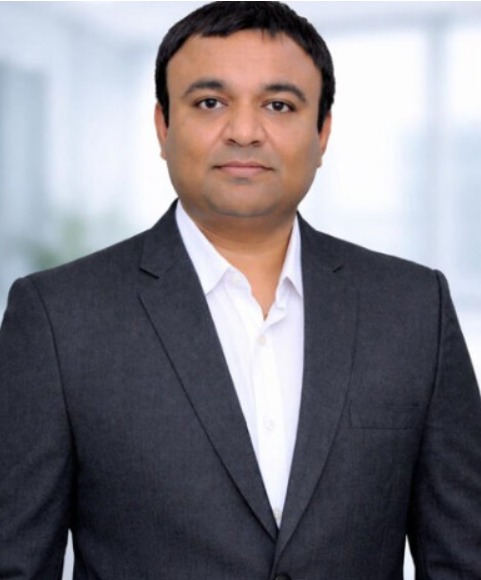
In an exclusive conversation, Sandip Patel, Managing Director, FarmPeace, shares his perspective on transforming agriculture into a technology-enabled, entrepreneurial and inclusive sector.
He discusses how India can attract younger generations back to agriculture, turn villages into innovation hubs, empower women farmers, strengthen farmer-market linkages and unlock the vast untapped potential of rural India.
1. Young people are increasingly moving away from farming. What needs to change to make agriculture an aspirational career again?
Agriculture needs to be presented not as a traditional occupation, but as a modern, technology-enabled business opportunity. Young people today are looking for careers that offer innovation, entrepreneurship, financial growth and the ability to create impact. Agriculture can offer all of these, but the ecosystem needs to evolve accordingly.
We need greater access to technology, reliable market information, modern infrastructure, financial services and opportunities across the agricultural value chain. The opportunity is also much larger than farming itself. There is significant scope in agri-tech, food processing, logistics, supply-chain management, farm services, climate-smart agriculture and rural entrepreneurship.
At FarmPeace, we believe that when young people can see agriculture as an industry where they can build businesses, use technology and solve meaningful problems, farming can become aspirational again.
2. How can India’s villages evolve into innovation hubs rather than simply production centres?
The first step is to recognise that innovation does not have to originate in large cities. India’s villages have something that many urban innovation ecosystems lack: direct access to real-world problems and deep contextual knowledge.
Villages can become innovation hubs when farmers, entrepreneurs, technology providers, educational institutions and local businesses have the infrastructure and platforms to collaborate. Digital connectivity, access to finance, skill development, local processing and better access to markets can create the foundation for this transformation.
We should also encourage more rural entrepreneurship around agriculture rather than focusing only on increasing production. Solutions in areas such as farm mechanisation, storage, food processing, renewable energy, logistics and climate resilience can be developed closer to the communities that need them.
3. What role can women farmers play in transforming India’s agricultural economy, and how is FarmPeace supporting this shift?
Women are already playing a significant role across India’s agricultural value chain, but their contribution is often not fully recognised in economic or business terms. They are involved not only in cultivation, but also in livestock management, post-harvest activities, processing, household financial decisions and increasingly in agricultural entrepreneurship.
The next step is to move from recognising women’s participation to strengthening their ownership and decision-making power. This requires better access to information, technology, credit, markets, training and networks.
At FarmPeace, our approach is to make agricultural information and opportunities more accessible so that women can participate more confidently in decision-making and entrepreneurship. The larger objective is to ensure that women are not simply contributors to the agricultural economy, but recognised as entrepreneurs and decision-makers within it.
4. If you had the opportunity to redesign India’s agricultural ecosystem from scratch, what are the first three changes you would make?
First, I would make agricultural decision-making more data-driven. Farmers need timely, reliable and actionable information on markets, weather, inputs, demand and economics to make better decisions.
Second, I would build stronger connections between farmers and markets. A productive farm is only one part of the equation. Farmers also need efficient supply chains, storage, processing, logistics and access to buyers so that value is not lost after production.
Third, I would invest heavily in rural entrepreneurship and skills. Villages should not only produce agricultural commodities; they should also become places where businesses are built around processing, technology, services, logistics and other parts of the value chain.
These three changes together can shift agriculture from a fragmented production-led ecosystem towards a more integrated, entrepreneurial and value-driven economy.
5. What untapped opportunities in rural India are businesses still overlooking?
One of the biggest overlooked opportunities is the rural consumer and entrepreneur. Rural India is often viewed primarily through the lens of agricultural production, while the diversity of its consumer demand and entrepreneurial potential receives much less attention.
There is significant opportunity in areas such as food processing, local manufacturing, farm services, logistics, storage, renewable energy, financial services, digital commerce and technology-enabled businesses. Businesses can also create value by solving highly local problems rather than simply adapting urban solutions for rural markets.
Another major opportunity is the talent available in rural communities. With the right training, connectivity and access to capital, rural youth can become entrepreneurs, service providers and technology adopters rather than being forced to migrate in search of opportunities.
The businesses that understand rural India as a market, a talent pool and an innovation ecosystem—not merely a production base—will be better positioned to participate in the next phase of India’s growth.
More Stories
Shubham Bibave & FlairList Global: India’s Fresh Produce Exports Enter a New Opportunity Cycle
Krishiyug Inovatives Pvt. Ltd.: Where Ancient Farming Wisdom Meets Rural Empowerment
Organic Inputs From Ionex Chemicals India Can Be Farmers’ New Biological Friend: Dr. Prashant Telgad